一
盐湖结晶。非蒸发所致——
是时间在自我沉淀。
你生于南十字星下,金矿区
将人骨锻成矿石。黄昏时
太阳熔为一枚硬币——无面值,未流通
仍在地心深处燃烧。
二
dugite蛇穿行花岗岩。腹鳞
刻写大地的人权法案——以鳞片,以疼痛
以被碾平的月光。
分叉的舌丈量人类的悔恨。太迟了。
Semper tardius.
你学会的不是理解,而是与恐惧同眠。
恐惧是殖民者留下的床;你卧于其上
梦见自己是原住民。
三
小麦带。时间不是直线
而是麦芒刺入掌心的深度。
丰饶与干旱在农夫掌中并行。
从一粒种子到一首诗的距离——
非光年,而是种子拒绝成为麦子的
那一秒。
四
你的诗行在广外榕树下光合作用。
珀斯的阳光,被翻译成
珠江的涟漪。
但翻译即背叛。当“内陆”遇见“江南”
两片大陆并不交换季风——
它们先沉默,然后各自下雨。
五
八十七岁。你是一枚被时间风化的盐晶
每个棱面折射着不同的澳洲——
梦创时代。罪疚。渴望。
还有那永远无法破译的内陆:
它不在任何地图上,而在
你拒绝言说之处。
六
未来的考古学家啊,勿挖掘我们的金属与塑料。
寻找这些诗行——它们如古盐床般横陈
保存着一位诗人如何以最简单的词语
浓缩了一个大陆的悲痛与尊严。
但盐会溶解。诗会消散。
唯有拒绝被浓缩之物,才真正活过。
跋
Glen老哥,你教我:内陆之心不可抵达
只能错过。
此诗亦然。
The Sutra of Salt and Bone
For Glen Philips
I
Salt lakes crystallise. Not by evaporation—
time precipitates itself.
You were born under the Southern Cross, in goldfields
that forge human bones into ore.
At dusk, the sun melts into a coin—
no denomination, never circulated,
still burning deep in the earth’s core.
II
A dugite glides through granite.
Its belly scales inscribe
the earth’s bill of rights—
in scales, in pain,
in moonlight pressed flat.
Its forked tongue measures human remorse.
Too late.
Semper tardius.
You learned not understanding,
but to sleep with fear.
Fear is the bed left by colonizers;
you lie upon it
and dream yourself indigenous.
III
The wheat belt.
Time is not a straight line,
but the depth to which a wheat spike pierces the palm.
Fertility and drought run side by side in the farmer’s hand.
The distance from a seed to a poem—
not light-years,
but the single second
when the seed refuses to become wheat.
IV
Your lines photosynthesise
under Guangwai’s banyan trees.
Sunlight from Perth
is translated into ripples on the Pearl River.
But translation is betrayal.
When “the inland” meets “the Jiangnan“,
two continents do not exchange monsoons—
they first fall silent,
then rain, each on its own.
V
Eighty-seven.
You are a salt crystal weathered by time.
Each facet refracts a different Australia—
Dreamtime. Guilt. Longing.
And the inland, never to be deciphered:
it exists on no map,
only where you refuse to speak.
VI
Archaeologists of the future,
dig not for our metal and plastic.
Seek these lines—
they lie exposed like ancient salt beds,
preserving how one poet,
in the simplest words,
condensed a continent’s grief and dignity.
But salt dissolves.
Poems fade.
Only that which refuses to be condensed
has truly lived.
Postscript
Glen, you taught me:
the heart of the inland cannot be reached—
only missed.
So too, this poem.
——致Elizabeth Jolley
I. 延迟的涌流
五十三岁,第一滴水才穿透
岩层——你早已在地下
开凿了三十年。那些退稿信
是压实的页岩,每一封都写着:
"太古怪了,太太。"
你学会了等待。像Flowermead的
花园,在伯明翰的雾中
练习干旱。护士的白帽子
盛过比药瓶更苦的秘密:
一个名字的双重生活,
两个女人共享的潮汐,
Leonard的谎言如地下水系
在岩缝中分叉,流向
珀斯——那片你称之为
"五英亩处女地"的
红土与桉树的悖论。
II. 井的拓扑学
他们说你的井是阴道——
黑暗的、潮湿的、可供探询的
孔洞。但你知道得更深:
井是倒悬的塔,
是广州塔在沙漠中的
精神对应物。当Hester
把那个身体推入黑暗,
她不是在隐藏罪,
而是在完成一次
延迟的分娩。
水,你说,是最后变暗的事物。
在《井》的深处,真相
不是浮上来的尸体,
而是 Kathy 与 Hester 之间
那种无法命名的
液体的忠诚。你的女人们
总是住在边缘:清洁女工、
护士、农场主的女儿,
她们用扫帚和注射器
书写另一种史诗——
不是英雄的,而是
幸存者的;不是线性的,
而是螺旋下降的。
III. 糖与母亲的炼金术
Edwin Page 的中危机
是一面扭曲的镜子。
你以喜剧的糖衣
包裹存在主义的苦核:
代孕母亲入侵学术的
圣殿,像澳洲的藤蔓
缠绕英国的石柱。
这是你最残忍的温柔——
让文明与野蛮
在一张床上醒来,
发现彼此都是
陌生人。
你称之为"mirth and malice",
但那是未完成的诊断。
在你的笑声深处,
有一种更古老的悲伤:
奥地利母亲的抑郁英语,
父亲和平主义的
无效抵抗,以及
那个在爱丁堡
被迫改名的护士——
Monica 成为 Elizabeth,
一次自我的
文学性流产。
IV. 晚年的语法
痴呆是最后的井。
当 Helen Garner 来访,
你已无法辨认
语言的倒影。
但也许这正是
你追求的:一种
前符号的状态,
像水回到水,
像你的角色最终
摆脱了情节的
暴政。
在 Wooroloo 的农场,
你学会了另一种
测量时间的方式:
不是按出版年份,
而是按雨水的
渗透速度。你的十五部小说
是十五次钻井,
每一次都触及
不同的地下河——
乱伦、女同性恋情欲、
音乐的超越性、
以及 always, always
女性之间那种
既吞噬又创造的
奇怪几何学。
V. 遗产的含水量
现在,Elizabeth Jolley 短篇故事奖
每年颁发,像一口
不断被重新发现的井。
但真正的遗产
是那些未被命名的
液体:你教会我们
阅读沉默的方式,
在对话的间隙
听见地下水的
轰鸣;你证明了
怪异是一种
道德义务——
当世界要求
清晰时,坚持
暧昧的伦理。
你的井从不提供
简单的解渴。它是一面
黑暗的镜子,照见
我们自己也不敢
推下去的
那个身体。而水——
水永远在
更深的地方,
在"浪费"中流淌,
在"渴望"中
保持纯净。
终
珀斯的夏天,一口老井
在回忆中升起
像一座倒悬的塔——
你终于学会了
用沉默
完成
最精确的
陈述。
The Dialectics of the Well
For Elizabeth Jolley
I. The Delayed Flow
Fifty-three years before the first drop pierced
the stratum—you had already been mining
three decades underground. Those rejection slips
were compacted shale, each inscribed:
"Too strange, Mrs."
You learned to wait. Like the gardens of Flowermead
practicing drought in Birmingham's fog. The nurse's white cap
held secrets more bitter than medicine bottles:
a name's double life,
two women sharing one tide,
Leonard's lies like a groundwater system
branching through fissures, flowing toward
Perth—that "five-acre virgin"
of red soil and eucalyptus you claimed
as paradox.
II. The Topology of the Well
They said your well was a vagina—
dark, damp, a hole
for inquiry. But you knew deeper:
the well is an inverted tower,
the spiritual correspondent
of Canton Tower in the desert. When Hester
pushed that body into darkness,
she was not concealing guilt,
but completing a delayed
delivery.
Water, you wrote, is the last thing to darken.
At the bottom of The Well, truth
is not the corpse that floats up,
but the liquid fidelity
between Kathy and Hester—
that loyalty which cannot be named.
Your women always lived at the margins:
cleaning ladies, nurses, farmer's daughters,
writing another kind of epic
with brooms and syringes—
not heroic, but
survivors'; not linear,
but spiraling down.
III. The Alchemy of Sugar and Motherhood
Edwin Page's mid-life crisis
is a distorting mirror.
You wrapped existentialist bitterness
in comic sugar-coating:
the surrogate mother invading academia's
sanctuary, like Australian vines
strangling English stone columns.
This was your cruelest tenderness—
letting civilization and savagery
wake in the same bed,
discovering they are both
strangers to each other.
You called it mirth and malice,
but that was an incomplete diagnosis.
Beneath your laughter,
an older grief:
your Austrian mother's depressed English,
your father's pacifist
ineffective resistance, and
that nurse in Edinburgh
forced to rename herself—
Monica becoming Elizabeth,
a literary abortion
of the self.
IV. The Grammar of Dementia
Dementia is the final well.
When Helen Garner visited,
you could no longer recognize
language's reflection.
But perhaps this was what you sought:
a pre-symbolic state,
like water returning to water,
like your characters finally
liberated from plot's
tyranny.
At the Wooroloo farm,
you learned another way
to measure time:
not by publication dates,
but by rainwater's
percolation speed. Your fifteen novels
were fifteen drillings,
each striking
a different underground river—
incest, lesbian desire,
music's transcendence,
and always, always
that strange geometry
between women
that both consumes and creates.
V. The Moisture of Legacy
Now, the Elizabeth Jolley Prize
for short fiction is awarded yearly—
a well constantly rediscovered.
But the true legacy
is the unnamed
liquid: the way you taught us
to read silence,
to hear the thunder
of groundwater
in the gaps of conversation;
your proof that
queerness is a moral
obligation—
when the world demands
clarity, insist on
the ethics of ambiguity.
Your well never offered
simple quenching. It is a dark
mirror, reflecting
the body we ourselves
dare not push down.
And water—
water is always
deeper,
flowing in waste,
remaining pure
in longing.
Coda
Perth summer. An old well
rises in memory
like an inverted tower—
you have finally learned
to use silence
to complete
the most precise
statement
《未完成的冶金术》
——致Chris Wallace-Crabbe
I. 铸币厂的学徒
六岁的男孩在皇家铸币厂
数着铜币上磨损的女王头像
——那是母亲钢琴课间隙的休止符
父亲从缅甸丛林寄来的信
在抽屉里发酵成
一种叫做"缺席"的合金
他学会用坩埚称量沉默:
一克是里士满的雨
一克是苏格兰学院的拉丁文
剩下的,全部熔进
那个关于"意义"的
永远无法锻造成形的模具
II. 耶鲁的再教育
一九六五年,他在纽黑文
重新学习浪漫主义——
不是华兹华斯的湖水
而是美国暴力的语法:
墨西哥城街头的敌意
越南在电视里的燃烧
构成一种新型的
形而上学创伤
他在弗洛伊德与克莱因之间
翻译人类的攻击性
如同翻译一首
永远无法押韵的诗
"死亡驱力"——
他在笔记本上写道——
"是英语中最美的
复合元音"
III. 语言的炼金术士
回到墨尔本,他成为
一个"和蔼的走私者"
将俚语偷运进崇高的殿堂
让"footy"与"epiphany"同桌
让"blokes"讨论"transcendence"
这种语域的越境
是他对殖民遗产的
温柔叛乱
他写《秋千》——
那个午夜在公园的孩子
在光明与黑暗之间
永不抵达的摆动
是存在的隐喻:
我们永远在途中
clarity never arrives
(清晰从未抵达)
IV. 食罪者
《多情食人族》——
这个标题本身就是
一场语义学的盛宴
他吃掉自己的悲伤
儿子的早逝
朋友的离去
将它们消化成
某种可以
喂养陌生人的
碳水化合物
elegy(挽歌)
在他手中不再是
古典的 consolation
而是一种
"持续的理性活动"
哀悼即思考
思考即活着
V. 雪的辩证法
在《我的脚饿了》里
他承认:雪
对一个桉树之子而言
永远是"他者"
白雪公主与雪鹅
在他干燥的童年里
显得"愚蠢"
但那个飘进丛林大火的
雪花——
比德的麻雀穿过
盎格鲁-撒克逊厅堂——
成为他最持久的意象:
生命的脆弱
在毁灭中的
短暂停留
VI. 八十岁的提问
现在,他坐在
墨尔本的某扇窗前
看着亚拉河
像一条
无法翻译的
注释
他还在问:
宇宙是否有意义?
如果有,
星星会重新排列吗?
季节会消失吗?
我们还需要
睡眠与排泄吗?
这些问题
比任何答案
都更忠诚地
陪伴他
超过六十年的
写作生涯
VII. 未完成的合金
他从未完成
那部关于"意义"的
终极配方
也许这正是
诗歌的本质:
一种永远
在冶炼中的
金属
他的遗产
不是答案
而是提问的方式
不是结论
而是思考的姿态
——那种将
高与低、悲与喜、
智与情
锻造成
不可分割的
合金的
技艺
尾声:给读者的附注
当你读这些诗行时
请记住:
真正的诗歌
不在纸上
而在你
与语言
相遇时
那瞬间的
电光火石
Chris Wallace-Crabbe
教会我们:
生活即思考
思考即生活
而诗歌
是这两者
在语言中的
婚姻。
THE UNFINISHED METALLURGY
For Chris Wallace-Crabbe
I. The Mint Apprentice
At six, the boy in the Royal Australian Mint
counted worn effigies of the Queen on copper coins—
those were the caesuras between his mother's piano lessons.
His father's letters from the Burmese jungle
fermented in a drawer into
an alloy called absence.
He learned to weigh silence in crucibles:
one gram of Richmond rain,
one gram of Scotch College Latin,
the rest poured into
the mold of meaning—
never to be forged into final form.
II. The Reeducation at Yale
Nineteen sixty-five: in New Haven
he relearned Romanticism—
not Wordsworth's waters
but the grammar of American violence:
the hostility of Mexico City streets,
Vietnam burning on television,
constituting a new
metaphysical trauma.
Between Freud and Klein
he translated human aggression
as one translates a poem
that will never rhyme.
"Death drive"—
he wrote in his notebook—
is the most beautiful
diphthong
in English.
III. The Linguistic Alchemist
Back in Melbourne, he became
a genial smuggler,
ferrying slang into the high temple,
seating footy beside epiphany,
letting blokes discuss transcendence.
This trespass of registers
was his tender
insurrection against colonial legacy.
He wrote The Swing—
that child at midnight in the park,
oscillating between light and dark,
never arriving.
Metaphor of existence:
we are perpetually en route;
clarity never arrives.
IV. The Sin-Eater
The Amorous Cannibal—
the title itself
a feast of semantics.
He devoured his own grief:
his son's early death,
the departure of friends,
digesting them into
carbohydrates
that might
nourish
strangers.
In his hands, elegy
was no longer
classical consolation
but a
continuous rational activity:
to mourn is to think;
to think is to live.
V. The Dialectic of Snow
In My Feet Are Hungry,
he confesses: snow
to a son of eucalypts
remains forever other—
Snow White and the snow goose
seemed absurd
in his dry childhood.
Yet that snowflake
drifting into bushfire—
the sparrow of Bede
passing through
the Anglo-Saxon hall—
became his most enduring image:
the fragility of life
in its brief sojourn
through destruction.
VI. The Interrogation at Eighty
Now he sits
at some Melbourne window,
watching the Yarra
flow like a
footnote
that cannot
be translated.
He still asks:
Does the universe possess meaning?
If so,
will the stars rearrange themselves?
Will seasons vanish?
Will we still need
sleep and excretion?
These questions,
more faithful than any answer,
have accompanied him
through six decades
of writing.
VII. The Unfinished Alloy
He never completed
the ultimate formula
for meaning.
Perhaps this is
the essence of poetry:
a metal
perpetually
in smelt.
His legacy
is not answers
but the manner of questioning;
not conclusions
but the posture of thought—
that craft of forging
high and low, grief and joy,
intellect and emotion
into an
indivisible
alloy.
Envoi: A Postscript to the Reader
When you read these lines,
remember:
true poetry
does not dwell on paper
but in the
lightning
of your encounter
with language.
Chris Wallace-Crabbe
taught us:
to live is to think;
to think is to live;
and poetry
is the marriage
of these two
in language.
I. 威克平的语法
麦粒在铁皮筒里投票。
十五岁,我才学会
用墨水代替羊粪
在纸上圈出主语。
但风早已教会我
另一种修辞——
当整个平原倾斜,
所有垂直都是
对重力的
温柔背叛。
II. 悉尼的纺织机
线轴转动。不是时间,
是资本的肠蠕动。
我的手指在棉絮中
测量某种温度:
不是发烧,是
系统性的
低烧。
三个儿子,九年,
足够让乌托邦学会
换尿布。我在
《工人之星》的铅字间
藏入自己的羊水——
那是最古老的
无产阶级。
III. 珀斯的解剖
他们要我讲解
乔叟的韵脚,
我却看见
萨莉·班纳在尖叫——
她的子宫是
一座被围困的
哥特式教堂。
四十岁时,
我终于敢于
在讲义边缘
写下阴蒂的
形而上学。
粉笔灰落下,
覆盖所有
纯洁的
定义。
IV. 蓝山的减法
疾病成为编辑。
它删除脂肪,
删除乳房,
删除
多余的
修辞。
剩下的骨头
更轻,也更
锋利——
像被海水
反复修改的
遗嘱。
埃斯特坐在轮椅上,
肥胖如一座
沉没的岛屿。
她记得法国河
每一个漩涡的
语法。
V. 风车的伦理
现在,我吃盐。
不是革命者的盐,
是背叛者的盐,
是幸存者的盐,
是终于承认
麦粒也会
腐烂的盐。
威克平的风车
还在转动。
不为磨面粉,
只为保持
一种姿态——
徒劳地,
庄严地,
对抗着
大地
永恒的
向下。
I. The Grammar of Wickepin
The wheat voted in its tin drum.
At fifteen I learned to trade sheep-dung
for ink, circling subjects on paper.
But the wind had already taught me
another rhetoric—
when the whole plain tilts,
every vertical becomes
a tender
betrayal
of gravity.
II. The Bobbin
It turns. Not time,
but capital's peristalsis.
My fingers in the cotton
measure a temperature:
not fever, but
a systemic
low-grade
burn.
Three sons. Nine years.
Enough to teach utopia
the logistics of diapers.
I hid my amniotic fluid
between the lead types of The Worker—
the oldest
proletariat.
III. The Dissection
They asked me to parse
Chaucer's rhymes.
I saw only
Sally Banner screaming—
her womb a besieged
Gothic chapel.
At forty I dared
to inscribe, in the margins
of my lecture notes,
the metaphysics
of the clitoris.
Chalk dust fell,
covering all
definitions
of purity.
IV. The Subtraction
Illness became my editor.
It deleted fat,
deleted breast,
deleted
redundant
figures of speech.
What remained—
bone, lighter
and sharper,
like a will
revised
by seawater
again
and again.
Esther sits in her wheelchair,
obese as a sunken island.
She remembers every syntax
of the French River's
whirlpools.
V. The Ethics of the Windmill
Now I eat salt.
Not the revolutionary's salt,
but the traitor's salt,
the survivor's salt,
the salt that admits
even wheat
rots.
The Wickepin windmill
still turns.
Not to grind flour,
but to maintain
a posture—
futilely,
solemnly,
resisting
the earth's
eternal
downward.
一、珀斯,1936
父亲把英语码放在码头
每个元音都贴着标签:大英帝国制造
母亲在厨房拆开这些声音
发现里面空无一人
婴儿的第一声哭
不属于任何语言
她后来学会的每一种词
都是为了填满那个空
西语是偷渡来的
没有签证,没有行李
只有一个叫法比奥的男人
在金斯敦的走廊里
把她的名字
翻译成另一种雨
二、正在漆成红色
刷子进入角落时
墙不再是墙
是我母亲从未拥有的房间
是她母亲从未涂过的指甲
是剑桥城墙内
一层层石灰下
那些没有名字的女人
用头发写下的字
父亲在电话里说resale value
他不知道
我正在卖的
是所有他买不起的东西
刷子继续
红色不是颜色
是时间终于
有了自己的形状
三、在Gambaro餐厅吃泥蟹
服务员端上来的是甲壳
不是食物
牙齿陷进去的瞬间
听见的不是碎裂
是潮水退回远古的声音
是泥滩上
另一个生物
用八只眼睛看着你
酱汁从指缝滴下
桌布染成河口
我吮吸的地方
正是它活过的地方
这不是晚餐
这是两个物种
在三分钟内
重新协商地球的归属
四、编辑部的椅子
1979年,Meanjin杂志
成堆的稿件里
有一首诗在呼吸
它的心跳太弱
它的韵脚走错了方向
它的作者不知道
自己正在写什么
我没有录用它
我只是把椅子
往窗户那边挪了挪
让更多光线
落在那页纸上
三十年后
那个作者说
那束光是他唯一发表过的作品
五、PEN International,1989
会议室里十三种语言同时在说
被监禁的作家
我的英语不够用
我的西语太私密
我的沉默
是第十四种
当轮到我发言
我只念了一个名字
和那个名字对应的
一行诗
翻译问:需要译成英文吗
我说:监狱听得懂
六、羽毛男孩
晚年她写道:
那个孩子被留在纸箱里
裹着羽绒枕
他活下来是因为
有人听见了
羽毛挤压时发出的
极轻的声音
写完这首诗那天
她在花园里
看见一只死去的鸽子
翅膀还保持着飞翔的姿势
她蹲下来
数了数羽毛
一根也没少
七、未完成的
在昆士兰的海滩
她可能曾写下:
“一生都在抵达
从一个码头到另一个
每次都带着同一个问题——”
然后撕掉
因为太像诗了
她真正留下的
是那些没被撕掉的:
九本诗集里
那些拒绝成为格言的句子
比如这句:
“我父亲担心resale value
他不知道
我正在卖的
是所有他买不起的东西”
尾声:拼接
我们这些后来的人
用各自的红色
拼她的碎片
有人拼出墙
有人拼出子宫
有人拼出
刷子经过时
那一瞬间的
空
I. Perth, 1936
Father stacked English on the wharf
each vowel labeled: Made in the British Empire
Mother unpacked these sounds in the kitchen
found nothing inside
The baby's first cry
belonged to no language
Every word she learned after
was to fill that emptiness
Spanish arrived as a stowaway
no visa, no luggage
only a man named Fabio
in a Kingston corridor
translating her name
into another rain
II. Being Painted Red
When the brush enters the corner
the wall ceases to be wall
It is the room my mother never owned
the nail polish her mother never applied
it is within the walls of Cambridge
beneath layers of lime
the nameless women
who wrote with their hair
Father says resale value on the phone
he does not know
what I am selling
is everything he could not afford
The brush continues
red is not a color
it is time finally
having its own shape
III. Eating Mud Crab at Gambaro
What the waiter brings is carapace
not food
The moment teeth sink in
what one hears is not cracking
but tide retreating to ancient times
on the mudflat
another creature
watching you with eight eyes
Sauce drips between fingers
the tablecloth becomes estuary
where I suck
is precisely where it lived
This is not dinner
this is two species
in three minutes
renegotiating the ownership of earth
IV. The Editor's Chair
1979, Meanjin magazine
among piles of manuscripts
a poem is breathing
Its heartbeat too faint
its rhymes walking the wrong way
its author unaware
of what he is writing
I did not accept it
I merely moved the chair
toward the window
let more light
fall on that page
Thirty years later
that author said
that beam of light was the only work he ever published
V. PEN International, 1989
Thirteen languages speaking simultaneously in the conference room
imprisoned writers
My English insufficient
my Spanish too intimate
my silence
the fourteenth
When my turn came to speak
I spoke only one name
and the line of poetry belonging to that name
The translator asked: Shall I translate into English?
I said: Prison understands
VI. The Feather Boy
In her later years she wrote:
The child was left in a cardboard box
wrapped in a down pillow
He survived because
someone heard
the feather's almost inaudible sound
when compressed
The day she finished this poem
in her garden
she saw a dead pigeon
wings still holding the posture of flight
She squatted down
counted the feathers
not one was missing
VII. The Unfinished
On a Queensland beach
she may have written:
"A life spent arriving
from one wharf to another
each time carrying the same question—"
Then tore it up
because it sounded too much like a poem
What she truly left
were the ones not torn:
in nine collections
sentences refusing to become maxims
Such as this:
"My father worried about resale value
he did not know
what I was selling
was everything he could not afford"
Coda: Piecing Together
We who come after
piece her fragments with our respective reds
Some piece together a wall
some a womb
some piece together
the moment
when the brush passes
that instant of
emptiness.
——致朱迪思·赖特
一. 起源:新英格兰高原
我的第一语言是花岗岩的沉默
是阿米代尔高原上,风
在桉树叶间翻译的
某种古老的元音
母亲教我辨认星座
父亲教我辨认罪——
那些从英国运来的
语法错误,如何在
异国的土壤中
长成正确的
压迫之树
我学会在黎明前醒来
听袋鼠的脉搏
穿过草原的
横膈膜
二. 女人的时态
1949年,我写下
女人对男人说:
"这是创造的时刻"
不是请求
是陈述
是子宫在陈述
它自己的
进行时
他们把这叫"女性诗歌"
仿佛潮汐
需要性别许可
才能
牵引月亮
我写下乳房的
地理学——
那些山脉如何在
孩子的口中
重新绘制
大陆的轮廓
三. 翻译火
后来,我学会
另一种语法:
燃烧的原住民
语法
他们的土地
被译成
"无人之地"
(terra nullius——
拉丁文的
种族灭绝)
我尝试用英语
为火辩护:
这种管理草原的
古老智慧
如何被误读为
野蛮
在翻译中
我失去了
我的口音
获得了
我的
良心
四. 大堡礁:白色的辩词
1960年代
我站在珊瑚的
骨骼上
那些石灰质的
死亡之舌
仍在
低语
我说:停止
他们说:发展
我说:生命
他们说:经济
我学会
一种新的修辞学:
沉默的
示威
当推土机
在海滩上
书写它们的
宣言
我用身体
组成一个
句号
五. 母语的丧失
女儿Meredith
在1970年
停止呼吸
我的语言
突然
失去所有
及物动词
只剩下
不及物的
哭泣
不及物的
等待
不及物的
岩石
我开始
与失明
谈判——
那种视网膜
拒绝翻译
光的
罢工
但岩石
仍在
教我
它们的
非视觉
语法:
触摸的
时态
重量的
性别
矿物的
记忆
六. 布莱德伍德的晚年
我搬到
大分水岭的
褶皱里
这里,袋鼠
比政客
更懂得
治理
我写下
越来越短的
诗——
像呼吸
像
最后几滴水
从岩石的
嘴角
渗出
我收集
原住民的
词汇:
不是为占有
是为
归还
我学会
花岗岩的
最终语法:
不是陈述
不是疑问
是
持续的
现在时
七. 遗嘱:岩石的继承
当我死去
不要把我
译成
英文
把我埋在
阿米代尔的花岗岩下
让我
重新学习
那种
没有字母的
语言
让我的骨头
成为
某种
标点——
不是句号
是
冒号
等待
下一个
学会
倾听的
女人
For Judith Wright
I. Origin: The New England Tableland
My first language was the silence of granite,
the wind in eucalyptus leaves
translating some ancient vowel
into breath.
Mother taught me to read constellations;
father taught me to read sin—
how errors shipped from England
learned to root in foreign soil
and grow into correct
trees of domination.
I learned to wake before dawn,
to listen for the pulse of kangaroos
crossing the diaphragm
of grassland.
II. The Tenses of Woman
In 1949, I wrote:
Woman to man: This is the moment of creation.
Not a request.
A statement.
The womb stating
its own
continuous
tense.
They called it "women's poetry"
as if tides
needed gender's permission
to
pull the moon.
I wrote the geography
of breasts—
how those mountains are redrawn
into continental contours
by the child's mouth.
III. Translating Fire
Later, I learned
another grammar:
the burning
grammar of the Indigenous.
Their land
translated into
terra nullius—
Latin for
genocide.
I tried to defend fire in English:
this ancient wisdom
of managing grassland,
how it was misread as
savagery.
In translation
I lost
my accent
and gained
my
conscience.
IV. The Great Barrier Reef: White Argument
In the 1960s
I stood on the bones
of coral.
Those calcareous
tongues of death
still
murmuring.
I said: Stop.
They said: Development.
I said: Life.
They said: Economy.
I learned
a new rhetoric:
the demonstration
of silence.
When bulldozers
wrote their manifestos
on the beach,
I composed my body
into a
full stop.
V. The Loss of Mother Tongue
My daughter Meredith
ceased breathing
in 1970.
My language
suddenly
lost all
transitive verbs.
Only
intransitive
weeping remained.
Intransitive
waiting.
Intransitive
rock.
I began
to negotiate
with blindness—
that strike of the retina
refusing to translate
light.
But the rock
continued
teaching me
its non-visual
grammar:
the tenses of touch,
the genders of weight,
the memories of mineral.
VI. Late Years at Braidwood
I moved into
the fold
of the Great Dividing Range.
Here, kangaroos
understand governance
better than politicians.
I wrote
increasingly short
poems—
like breath,
like
the last drops
seeping from the rock's
mouth.
I collected
Indigenous
words:
not to possess,
but to
return.
I learned
the ultimate grammar
of granite:
not statement,
not question,
but
continuous
present.
VII. Testament: The Inheritance of Rock
When I die,
do not translate me
into
English.
Bury me beneath the granite of Armidale.
Let me
relearn
that alphabet-less
language.
Let my bones become
some kind of
punctuation—
not period,
but
colon:
waiting
for the next
woman
who learns
to listen.
——献给Les Murray
I. 动词
牛群在达令河干涸的河床里
练习一种古老的语法:
如何用蹄印
修改地图的偏见。
老农的儿子在邮局背面
学会用沉默的复数形式说话——
我们,不是指他和父亲,
而是指所有被干旱删除的雨季。
II. 方言
原住民在加油站
用英语购买汽油,
用瓦拉穆里语
计算星辰的债务。
这种双语的不平等
如此精确:
他们付现金
找回的是
整个大陆的
误译。
III. 肥胖的弥赛亚
三百斤的诗人
坐在堪培拉的轮椅上
成为内陆的
反几何中心。
他的身躯是
被殖民者忽视的
另一种地形——
丘陵、盆地、
所有被标准地图
省略的
褶皱与阴影。
当他说肥胖
他说的是
一片大陆
拒绝被
瘦削的欧洲美学
消化的
倔强。
IV. 扁平的诗学
在这里,地平线
不是界限
而是动词:
它地平着,
持续地将天空
拉向地面
直到两者
在热浪中
达成一种
平等的
模糊。
桉树理解这种语法:
它们从不向上
祈求,
而是横向
蔓延——
用灰绿色的
怀疑主义
覆盖
所有垂直的
神。
V. 最后的从句
现在,当旱季的
尘埃开始
编辑我的肺叶,
我终于读懂
这片土地的
句法:
主语永远是
缺席的雨水,
谓语是
等待的
未完成时,
而宾语——
哦,那个宾语——
是下一代
将要
误读的
整个
天空。
for Les Murray
I. The Verb
The cattle in the Darling's dry riverbed
practice an ancient grammar:
how to revise
the map's prejudice
with hoofprints.
The old farmer's son learns, behind
the post office, to speak
in the plural of silence—
we, meaning not him and his father,
but all the wet seasons
deleted by drought.
II. The Dialect
The Aboriginal buys petrol
at the roadhouse in English,
calculates the debt of stars
in Walmajarri.
This bilingual inequality
so precise:
he pays cash,
receives in change
the entire continent's
mistranslation.
III. The Obese Messiah
Three hundred pounds of poet
in a Canberra wheelchair
becomes the interior's
anti-geometric centre.
His body is
another topography
ignored by colonisers—
hills, basins,
all the folds and shadows
omitted
from standard maps.
When he says obese,
he speaks of
a continent's
refusal to be
digested
by lean European
aesthetics.
IV. The Poetics of Flatness
Here, the horizon
is not a boundary
but a verb:
it horizons,
continuously pulling sky
toward earth
until both
in the heat-shimmer
achieve
an equal
blurriness.
The eucalypts understand
this syntax:
they never reach
upward in prayer,
but spread
laterally—
covering
all vertical
gods
with grey-green
scepticism.
V. The Final Clause
Now, as the dust
of the dry season
begins to edit my lungs,
I finally read
the grammar
of this land:
The subject is always
the absent rain,
the predicate
the unfinished tense
of waiting,
and the object—
oh, that object—
is the whole sky
the next generation
will
misread.
——献给Rodney Hall
I. 大陆的语法
袋鼠的骨骼在红色词典里排列成
一部没有元音的法律。风
从艾尔斯岩的褶皱中取出
所有被晒黑的介词——它们曾经
连接海洋与海洋,直到
板块漂移成为唯一的修辞学
我们测量距离的方式是
用一只鸸鹋的遗忘:
它奔跑时,大陆
在身后缓缓闭合
像一本被合上的家谱
II. 殖民地的时态
第一舰队带来的不只是铁链
还有未来完成时——
我们将已经
成为这片空白的主人
而在原住民的梦境里
祖先早已用歌曲
测绘了每一寸土地
他们的现在进行时
是永恒的:正在成为
正在成为山脉
两种语法在墨累河相遇
河水学会了
同时流向两个方向:
一边是盐,一边是
尚未命名的甜
III. 流亡者的地图学
Hall,你笔下的字符
是另一种移民——
从英语的子宫叛逃
在澳洲的烈日下
蜕变成新的物种
你写内陆(outback)
那个out是向外的暴政
back是向内的乡愁
而中间的空白
正是我们
尚未学会发音的
元音:啊——
IV. 沙漠的图书馆
这里没有书。只有
三齿稃草以每年
一毫米的速度
书写一部关于
耐心的史诗
蜥蜴是标点符号
它的静止
比任何逗号都长
它的突然奔跑
是惊叹号
在沙地上留下的
省略号
而你,Hall
你是那个在
四十度高温下
仍然试图阅读
这些象形文字的人
你的汗水滴落
成为脚注
蒸发成
新的云层
V. 边缘的圆心
他们说澳洲是
世界的边缘。但
边缘是什么?
只是圆心
在别处的
另一个名字
在这里,边缘
是唯一的圆心:
所有的方向
都指向外部
所有的外部
都是内部
你的人物——
那些在内陆
迷失的、寻找的、
等待风暴的——
他们站在
世界的肚脐上
却以为自己在
地图的折痕里
VI. 沉默的方言
澳洲英语是
一种减法:
去掉所有的
装饰、历史、
层叠的隐喻
剩下的
是裸露的
名词:岩石。
热。距离。
等待。
但在这贫瘠中
你听见了
丰饶的回声:
当一只苍蝇
在寂静中
改变航向
那是整个大陆
在调整
它的呼吸
VII. 归返的考古学
最终,Hall
你的写作是
一种逆向的
殖民——
不是占领
而是归还:
把英语
还给沉默
把故事
还给土地
把人物
还给他们的
不可理解
你在小说的
尽头留下的
那些空白
不是遗忘
而是尊重:
有些沙漠
不应该被
穿越
有些海图
应该保持
内陆的
身份——
永远指向
一个
不存在的
海洋
For Rodney Hall
I. The Grammar of Continent
The kangaroo's bones arrange themselves in the red lexicon as
a law without vowels. Wind
extracts from Uluru's folds
all the sun-blackened prepositions—they once
connected ocean to ocean, until
continental drift became the only rhetoric
We measure distance by
the emu’s forgetting:
as it runs, the continent
slowly seals itself behind
like a family album snapped shut
II. The Tense of Colony
The First Fleet brought not merely chains
but the future perfect—
we will have
become masters of this blank
While in the Aboriginal Dreaming
ancestors had already mapped
every inch of land in song
their present continuous
is eternal: becoming
becoming mountain
Two grammars meet at the Murray River
the water learns
to flow simultaneously in two directions:
salt on one side, and on the other
a sweetness yet unnamed
III. The Cartography of Exile
Hall, your characters are
another species of migrant—
deserters from the womb of English
metamorphosed under Australian sun
into something new
You write outback
where out is the tyranny of outward
back is the homesickness of inward
and the white space between
is our
unpronounceable
vowel: ah—
IV. The Library of Desert
Here there are no books. Only
spinifex writing at one millimetre per year
an epic of
patience
The lizard is punctuation
its stillness
longer than any comma
its sudden sprint
an exclamation mark
leaving behind
in sand
an ellipsis
And you, Hall
you are the one who
in forty-degree heat
still attempts to read
these hieroglyphs
your sweat falls
becomes footnote
evaporates into
new cloud formations
V. The Centre of Edge
They say Australia is
the edge of the world. But
what is edge?
Only another name
for centre
when the centre is
elsewhere
Here, edge
is the only centre:
all directions
point outward
all outward
is inward
Your characters—
those lost in inland,
those searching, those
waiting for storms—
they stand upon
the world's navel
believing themselves
in the crease of a map
VI. The Dialect of Silence
Australian English is
a grammar of subtraction:
stripping away all
ornament, history,
layered metaphor
What remains
is naked
noun: rock.
heat. distance.
waiting.
Yet in this poverty
you heard
the echo of abundance:
when a fly
alters its course
in silence
that is the entire continent
adjusting
its respiration
VII. The Archaeology of Return
Finally, Hall
your writing is
a reverse
colonisation—
not occupation
but restitution:
returning English
to silence
returning story
to land
returning character
to their
incomprehensibility
The blanks you leave
at novel's end
are not forgetting
but respect:
some deserts
should not be
crossed
Some charts
must remain
inland—
forever pointing
toward
a
nonexistent
ocean
《《反季节的雨》
(献给安德鲁·泰勒)
I. 干旱的语法
袋鼠的骨骼在围栏上
教授白垩纪的修辞学——
它们如何省略血肉
如何使动词风化
成为最诚实的名词
我学会用舌头称量空气:
当湿度低于某个古老的
阈值,词语开始
向内卷曲,像
桉树叶守护精油的
秘密——我收集这些
干燥的标本,如同
在刑期里测量
每一口呼吸的重量
II. 水的时间性
而雨终于来临时
它并非降临,而是
从地底涌上——
那些被囚禁的
地下水,记得
所有被篡改的地图
每一滴都携带
双重国籍:
太平洋的盐分
与内陆亿万年的
沉默。在接触
舌尖的刹那
完成一次
微型的主权移交
像从未发生过
却永远被铭记的
那一吻
III. 殖民者的气象学
我的祖父测量雨量
用的是英制单位
仿佛水需要
被翻译才能
被理解。他从未学会
阅读云层中
原住民的
点彩派绘画——
那些关于迁徙的
白色象形文字
他用铜壶接水
用刻度记录
却不懂云如何
用白垩讲述
草种子的
逃亡路线
如今我使用
两种刻度:
毫米,以及
“一个手指节”
后者来自
我未曾谋面的
祖母,她的语言
被干旱保存得
比任何档案
更为完好——
像盐,像骨
像雨落下之前
空气中
那一刹那的
静止
IV. 蒸发作为认识论
水坑在柏油路上
绘制短暂的
存在主义地图:
边界每小时
重新谈判
没有条约
只有蒸发的
单边主义
我蹲下身
观看自己的脸
在其中溶解——
这不是那喀索斯
而是某种
更古老的认识:
当自我成为
测量工具
而非被测量的
对象,每一滴
消失的水
都在问:
你用什么单位
称量你不在场时
世界的重量?
V. 反季节的正义
这场雨迟到了
四个月,像一份
被延误的
司法判决——
土地早已
在缺席审判中
被判给
沙子——
原告,缺席
被告,缺席
只有太阳
作为唯一的
见证人,持续
焚烧证据
但水从不承认
败诉。它继续
下着,用
不可上诉的
persistence
渗透每一道
裂缝,直到
岩石开始学习
液体的逻辑——
如同记忆
终于学会
原谅那
遗忘它的人
VI. 语言的渗透性
我试图写下这些
却发现墨水
在纸上扩散——
纸浆来自
被砍伐的
本土森林,它们
如今以
另一种形式
继续吸水
成为遗嘱
成为账单
成为写满
入侵者语言的
空白页
或许这就是
殖民的终极
隐喻:我们
使用的工具
早已是
被征服者的
身体,而书写
本身,就是
一种缓慢的
渗透与
被渗透——
像树根
学会用混凝土的
语言呼吸
VII. 雨停之后的测量学
现在,天空
恢复其
帝国的蓝——
那种拒绝
被解读的
绝对色彩
像从未下过雨
像历史从未
发生过
我走出屋外
用脚步丈量
湿润与干燥
的边界线
这条线
每小时向北
推进,像
一个缓慢的
历史句号
也像省略号——
而在某处
地下水继续
它的地下
外交,不与
任何地表政权
建立正式
关系——
这种沉默
或许才是
最精确的
诗歌:
不可翻译
却能被
每一口干渴的井
理解
VIII. 作为余震的干燥
三天后,土壤
恢复其
熟悉的
拒绝姿态
只有最深的
根须记得
那场雨的
演讲内容——
关于忍耐
关于如何用
最少的泪水
活最长的命
我检查雨量器:
47毫米——
一个数字
无法翻译
那种站在
门廊上
观看水
从不可能
的方向
来临时的
近乎
宗教性的
颤抖——
像第一次
听见自己的名字
被死者
轻声呼唤
IX. 最后的蒸发
这首诗
正在干涸——
你可以看到
词语开始
收缩,留下
白色的盐渍
轮廓,像
湖泊遗留在
沙漠中的
遗嘱
但请记住:
蒸发从不
意味着消失
只是转移
到某个
更庞大的
循环系统
在那里,所有
被书写的
与未被书写的
终将相遇
在云层中
形成新的
语法——
一种不再区分
主语与宾语
干旱与雨
征服者与被征服者
的语言
而我将继续
等待下一场
反季节的雨——
不是作为
受害者,也不是
幸存者
而是作为
一个学会了
用干旱
来测量
自身匮乏的
诗人,深知
每一种干燥
都是水的
另一种
存在形式——
如同每一个
沉默的词
都在等待
属于它的
那一场雨
---
for Andrew Taylor
I. The Grammar of Drought
The kangaroo skeleton on the fence
teaches Cretaceous rhetoric—
how to omit the flesh,
how to weather the verb
into the most honest noun.
I learn to weigh air with my tongue:
when humidity falls below
some ancient threshold, words begin
to curl inward, like
eucalyptus leaves guarding their
secret—essential oils.
I collect these
dried specimens, as if
measuring, in my sentence,
the weight of every breath.
II. The Temporality of Water
And when the rain finally arrives
it does not fall, but rises
from underground—
those imprisoned
aquifers, remembering
all the maps that were ever altered.
Each drop carries
dual citizenship:
Pacific salt
and the inland's
million years of silence. Upon touching
the tongue, it completes
a miniature transfer
of sovereignty—
like a kiss
that never happened
yet is forever
remembered.
III. The Colonist's Meteorology
My grandfather measured rainfall
in imperial units,
as if water needed
translation to be
understood. He never learned
to read the Aboriginal
pointillist paintings in the clouds—
those white hieroglyphs
of migration.
He caught water in a copper pot,
recorded it in gradations,
yet never understood how clouds
use chalk to narrate
the escape routes
of grass seeds.
Now I use
two scales:
millimeters, and
"one knuckle"—
the latter from
my grandmother, whom I never met,
her language preserved by drought
more faithfully than any archive—
like salt, like bone,
like that instant of stillness
in the air
before rain falls.
IV. Evaporation as Epistemology
The puddle on the asphalt
draws a fleeting
existential map:
borders renegotiated
hourly,
no treaties,
only the unilateralism
of evaporation.
I crouch down
to watch my face
dissolve in it—
this is not Narcissus
but something
older:
when the self becomes
the measuring instrument
rather than the measured
object, every drop
of disappearing water
asks:
With what unit
do you weigh the world
in your absence?
V. Justice Out of Season
This rain is four months late,
like a delayed
judicial verdict—
the land already
condemned in absentia
to sand—
plaintiff, absent;
defendant, absent;
only the sun
as sole witness,
continually burning
the evidence.
But water refuses
to recognize defeat. It continues
falling, with
unappealable
persistence,
seeping into every
crack, until
the rock begins to learn
the logic of liquid—
as memory
finally learns
to forgive
the one who forgot it.
VI. The Permeability of Language
I try to write this
and find the ink
bleeding on the page—
the pulp made from
felled native forests, which now
continue absorbing water
in another form:
as testament,
as bill,
as blank pages
filled with the invader's
language.
Perhaps this is
the ultimate
metaphor of colonization: the tools
we use are already
the bodies
of the conquered,
and writing itself
is a slow
permeation
and being-permeated—
like tree roots
learning to breathe
the language of concrete.
VII. The Metrics of After-Rain
Now the sky
resumes its
imperial blue—
that absolute color
which refuses
interpretation.
As if it never rained.
As if history never
happened.
I walk outside
to pace the border
between wet and dry,
this line
advancing north
hour by hour,
like a slow
historical full stop,
or like an ellipsis—
and somewhere
the groundwater continues
its underground
diplomacy, establishing
no formal relations
with any surface regime—
this silence
perhaps being
the most precise
poetry:
untranslatable,
yet understood
by every thirsty well.
VIII. Dryness as Aftershock
Three days later, the soil
resumes its
familiar
gesture of refusal.
Only the deepest
roots remember
the content of that rain's
speech—
about endurance,
about how to live
the longest life
with the least tears.
I check the rain gauge:
47 millimeters—
a number unable to translate
that nearly
religious
tremor
of standing on the veranda
watching water arrive
from an impossible
direction,
like hearing
for the first time
your own name
called softly
by the dead.
IX. The Final Evaporation
This poem
is drying—
you can see
the words beginning
to contract, leaving
white salt-stain
outlines, like
the will a lake
leaves in the desert.
But remember:
evaporation never
means disappearance,
only transfer
to some vaster
circulatory system
where all that is written
and unwritten
will eventually meet,
forming new
grammar in the clouds—
a language that no longer
distinguishes
subject from object,
drought from rain,
conqueror from conquered.
And I will continue
waiting for the next
rain out of season—
not as victim, not as
survivor,
but as
a poet who has learned
to measure his own lack
by drought, knowing well
that every dryness
is merely water's
another
form of being—
as every silent word
waits for
the rain
that belongs to it.
——献给约翰·金塞拉
一、盐
我的舌头是盐碱地,拒绝驯化
拒绝说出“美丽”——这个词被农药腌制太久
当你们用“田园”涂抹这片被窃取的土地
我在麦芒的倒刺里寻找原住民的齿痕
这里的每一粒沙都曾目睹一场葬礼
二、边界
铁丝网在黄昏中学会新的语法
它将袋鼠的跳跃翻译成非法入侵
将河流的蜿蜒标注为产权纠纷
我在语法书空白处发现一只鸸鹋的脚印——
未被殖民的标点
拒绝在句子尽头停下来
三、毒
他们称之为“改良”
将野花的名字从词典删除
换上化学式的编号
我在喷雾器的轰鸣声中听见一种古老的沉默
正在结晶:像盐,像悔恨,像
所有未被说出的道歉
在土壤深处形成一层无法耕作的硬壳
四、反田园
不,这不是风景
这是伤口在展示愈合过程
这是被砍伐的森林在练习一种没有树叶的语言
当旅游手册将荒漠美化为“原始”
我在蜥蜴的瞳孔里看见一场尚未结束的抵抗——
它的冷血
比任何抒情都更灼热
五、语法课
教我如何不用“拥有”谈论土地
教我如何在名词的暴政下保护动词的野性
教我——
当收割机将麦田变成几何学标本——
如何继续相信一粒麦子的叛乱
语法即伦理
每一个句子的结构都是一次土地的分配
六、盐的回声
最终我的舌头将完全盐碱化
成为这片大陆最诚实的地形
拒绝产出甜蜜的隐喻
只析出那些无法被消化的真相:
我们从未真正抵达这里
我们只是在别人的伤口上建立自己的语法
七、未完成的地图
现在我在空白处画下一只未命名的鸟
它的飞行路线拒绝被经纬度捕获
它的鸣叫是一种尚未被殖民的时态——
将来过去时:
那些将要发生的偿还
早已在沙粒中
等候
——For John Kinsella
I. Salt
My tongue is saltbush country, refusing domestication
refusing to speak "beauty"—the word brined in pesticides too long
When you smear "pastoral" across this stolen land
I search for Aboriginal toothmarks in the barb of wheat awns
Every grain of sand here has witnessed a funeral
II. Border
Barbed wire learns new grammar at dusk
It translates the kangaroo's leap into illegal entry
annotates the river's meander as property dispute
In the textbook margin I discover an emu's footprint—
unconquered punctuation
refusing to stop at the sentence's end
III. Poison
They call it "improvement"
erasing wildflowers' names from the dictionary
replacing them with chemical serial numbers
In the sprayer's roar I hear an ancient silence
crystallizing: like salt, like remorse, like
all the unspoken apologies
forming an unploughable hardpan in the soil's depths
IV. Anti-Pastoral
No, this is not landscape
this is a wound displaying its healing process
this is logged forest practicing a language without leaves
When the travel brochure aestheticizes desert as "primitive"
I see in the lizard's pupil an unfinished resistance—
its cold blood
more incandescent than any lyric
V. Grammar Lesson
Teach me to speak of land without "possession"
Teach me to protect the verb's wildness under the tyranny of nouns
Teach me—
when the combine harvester turns wheatfields into geometric specimens—
how to keep believing in a grain's insurgency
Grammar is ethics
Every sentence structure is a distribution of land
VI. The Echo of Salt
Eventually my tongue will fully salinize
becoming this continent's most honest topography
refusing to yield sweet metaphors
precipitating only those indigestible truths:
We never truly arrived here
we merely built our grammar upon another's wound
VII. Unfinished Map
Now I draw in the margin an unnamed bird
its flightpath refusing capture by latitude and longitude
its song an unconquered tense—
The future perfect:
those reparations yet to come
have long been waiting
in the sand.
——献给Andrew Lansdown
一、干燥部
他测量沉默的方式
是舔舐——舌头上——盐分的边界
在澳大利亚中部,每一块石头
都是一本拒绝被阅读的书
袋鼠的骨骼在月光下排列成
某种古老文字的偏旁
他蹲下来,不是为了辨认
而是为了成为
被辨认的对象
风经过时
会带走一些人的名字
他收集这些空缺
像收集水——
在一只漏底的陶罐里
二、水的神学
河流是内陆唯一的谎言
它讲述海洋的故事
却死于讲述的中途
他学会了在干涸的河床上
辨认水的记忆:
那些鹅卵石圆润的弧度
是曾经温柔的语法
那些裂缝暴烈的走向
是干涸时最后的修辞学
有一天他梦见自己
成为最后的水滴
悬在桉树叶尖
拒绝坠落
因为坠落意味着
成为盐的一部分
三、火的编年史
丛林大火来临时
他站在火线边缘
记录火焰的句法——
那种吞噬与保存
同时进行的悖论语法
某些种子只在
六十摄氏度时醒来
某些真相只在
毁灭的语境中
显露原形
他看见一只蜥蜴
将自己埋入沙中
只留鼻孔在外
像两个标点符号
等待整个句子
燃烧殆尽
这让他想起父亲
在临终的病床上
如何将自己
埋入被单
只留眼睛在外
阅读房间里
那束逐渐熄灭的光
四、时间的地层学
他开始相信
澳大利亚的平坦
是一种垂直的深邃
没有褶皱的山脉
意味着没有
可供翻阅的页码
于是他向下挖掘
在矿井的黑暗中
触摸三亿年前
蕨类植物的
呼吸化石
每一次下潜
都是一次向上
回到那个
所有大陆
还是整体的
孤独纪元
在那里,他遇见了
未来的自己——
一个正从
正在形成的
煤炭中
向外张望的
黑色瞳孔
五、命名的黄昏
他晚年致力于
为所有无名之物
赋予名字
不是为了占有
而是为了
在语言中
为它们建造
一座临时的
栖身之所
他给一块红色的石头
命名为"拒绝"
给一片枯死的湖床
命名为"曾经"
给一种只在黎明前
鸣叫的鸟类
命名为"几乎"
最后一个词
他留给自己:
在字典的
空白页边缘
他写下
"澳大利亚"
然后划掉
写下
"内陆"
然后划掉
最后,在
层层划掉的
痕迹之上
他画了一个
圆圈——
没有圆心
没有边界
只有
一个正在
被风
吹散的
形状
六、盐的神谕
临终那天
他要求被葬在
盐湖的中心
那里,白色
是一种深度
而非颜色
那里,站立
是一种沉没
的变体
那里,他将成为
被测量者
而非测量者
他的骨骼
将在千年后
成为某种
结晶的语法
被未来的
考古学家
误读为
某种宗教的
祭器
而实际上
他只是
终于学会了
如何像盐一样
保存
空无
I. The Dry Section
The way he measured silence
was by licking—the tongue—the boundary of salt.
In the heart of Australia, every stone
is a book that refuses to be read.
The skeletons of kangaroos arrange themselves
under moonlight into the radicals of some ancient script.
He squats, not to decipher,
but to become
the object of deciphering.
When wind passes through,
it carries away certain people's names.
He collects these absences
as one collects water—
in a pot with no bottom.
II. The Theology of Water
Rivers are the inland's only lie.
They tell the ocean's story
but die mid-sentence.
He learned to read, on dry riverbeds,
the memory of water:
the rounded arc of those pebbles
was once tender grammar;
the violent trajectory of those cracks,
the final rhetoric of dessication.
One day he dreamed himself
into the last drop,
hanging from a eucalyptus leaf,
refusing to fall—
for falling means
becoming part of salt.
III. The Chronicle of Fire
When bushfire came,
he stood at the edge of the flame-line,
recording the syntax of fire—
that paradoxical grammar
of consuming and preserving
simultaneously.
Certain seeds only wake
at sixty degrees Celsius.
Certain truths only reveal
their original form
in the context of destruction.
He saw a lizard
bury itself in sand,
leaving only nostrils exposed—
like two punctuation marks
waiting for the whole sentence
to burn itself out.
This made him remember his father
on his deathbed,
how he buried himself
in sheets,
leaving only eyes exposed—
reading the room's
that beam of gradually extinguishing light.
IV. The Stratigraphy of Time
He came to believe
that Australia's flatness
is a vertical depth.
Mountains without folds
mean pages
that cannot be turned.
So he dug downward,
touching in the mine's darkness
the breathing fossils
of ferns
from three hundred million years ago.
Each descent
is an ascent,
returning to that
lonely eon
when all continents
were still whole.
There, he met
his future self—
a black pupil
looking outward
from coal
still in the process
of forming.
V. The Dusk of Naming
In old age he devoted himself
to giving names
to all unnamed things.
Not to possess,
but to build for them
in language
a temporary
dwelling.
To a red stone
he gave the name Refusal.
To a dried lakebed
he gave the name Once.
To a bird that sings
only before dawn,
he gave the name Almost.
The last word
he reserved for himself:
on the blank margin
of the dictionary,
he wrote
Australia,
then crossed it out.
Wrote
Inland,
then crossed it out.
Finally, upon
these strata of crossed-out
traces,
he drew a circle—
no center,
no circumference,
only
a shape
in the process of being
scattered
by wind.
VI. The Oracle of Salt
On his last day,
he asked to be buried
at the center of the salt lake.
There, white
is a depth,
not a color.
There, standing
is a variant
of sinking.
There, he will become
the measured,
not the measurer.
His bones,
in a thousand years,
will become some kind of
crystalline grammar,
misread by future
archaeologists
as some religious
vessel.
But in fact
he has simply
finally learned
how, like salt,
to preserve
emptiness.
《内陆之心》——致Andrew Burke
I. 红土纪年
袋鼠的骨骼在公路上排列成
一种新的字母表——
不是死亡,是翻译。
内陆用它的沉默
修改所有关于水的隐喻。
这里,时间不是河流,
是蒸发。是盐
在铁皮屋顶上
写下白色的
自传。
II. 加油站神学
午夜。纳拉伯荒原。
荧光灯下,一个老人
用汽油味的手指
翻阅《圣经》的空白页。
他说:上帝是
最后一个离开小镇的人
留下的
未付账单。
我递给他一枚硬币。
它落入收银机的声响
像一颗陨石
落入
地球的
记忆。
III. 边缘的语法
海岸线是大陆
试图学习
停止的
草稿。
浪花重复着
关于抵达的谎言,
而礁石知道:
真正的边界
是盐与铁
相互辨认的
那一刻。
我站在这里——
不是中心,不是边缘,
是两者
交换
秘密的
缝隙。
IV. 最后的牧羊人
他的狗已经学会
与卫星导航争论。
羊群是移动的云,
是天空
对地面的
乡愁。
傍晚,他对着手机
朗诵一首
从未写下的诗:
关于干旱,关于
如何在缺席中
喂养
存在。
信号中断。
只剩下风,
在古老的
桉树语法里
重新编排
孤独。
V. 内陆之心
终于,我理解了
这片大陆的
几何学:
它不是被占据,
是被穿越。
不是家园,
是途经。
不是答案,
是提问的
方式。
红土进入血液,
不是为了改变它,
而是证明——
我们体内
早已存在的
那种
干涸的
辽阔。
终
当飞机起飞,
城市在舷窗外
重新组装它的
网格。
我知道有些东西
留在了下面:
不是足迹,
是脚印
学会
独自
行走的
那个
瞬间。
For Andrew Burke
I. Red Earth Chronicle
Kangaroo bones align the highway into
a new alphabet—
not death, translation.
The interior revises with its silence
all metaphors of water.
Here, time is not river,
is evaporation. Is salt
inscribing its white
autobiography
upon corrugated iron.
II. The Theology of Petrol Stations
Midnight. Nullarbor Plain.
Under fluorescent light, an old man
turns the blank pages of the Bible
with gasoline-scented fingers.
God, he says, is
the last man to leave town,
the unpaid bill
he left behind.
I hand him a coin.
Its fall into the register
sounds like a meteorite
dropping into
the earth's
memory.
III. Grammar of the Edge
The coastline is the continent's
rough draft
of learning
how to stop.
Waves repeat
the lie of arrival,
while the reef knows:
the true border
is that moment
when salt and iron
recognize
each other.
I stand here—
not center, not edge,
but the fissure
where both
exchange
their secrets.
IV. The Last Shepherd
His dog has learned
to argue with satellite navigation.
The flock is a moving cloud,
the sky's
homesickness
for the ground.
At dusk, he recites into his phone
a poem
never written:
about drought, about
how to feed
existence
with absence.
Signal lost.
Only wind remains,
rearranging solitude
in the ancient
grammar of eucalyptus.
V. The Heart of the Interior
At last I understand
the geometry
of this continent:
it is not possessed,
it is crossed.
Not homeland,
but passage.
Not answer,
but the manner
of asking.
Red earth enters the blood
not to alter it,
but to prove—
the dried
immensity
already within us.
Envoi
As the plane ascends,
the city reassembles its grid
beyond the window.
I know something remains below:
not footprints,
but the instant
when a footprint
learns
to walk
alone.
——或,在班伯里港,一只鹈鹕正在忘记如何飞行
I. 潮间带:暴露的语法
班伯里港。第七根木桩。
一只鹈鹕练习悬停——
不,是练习坠落的慢动作,
把空气当成水,把翅膀
当成无法闭合的伤口。
我学会这种语法:
不是元音的流动,
而是辅音的断裂,
像赫特泻湖的盐壳
在旱季裂开的纹路——
每一道缝隙都在拒绝
成为地图。
你的外祖母把牛
赶到床底下过冬。
不是隐喻。是1943年
荷兰村庄的具体黑暗,
牛粪的热气,
与冻死的婴儿
共享同一份
无法分配的
体温。
我在这里记录:
白骨顶鸟轮流孵卵,
但从不询问
蛋里是谁的
沉默。
II. 桉树皮:档案的腐烂
巴瑟尔顿栈桥。第2049块木板。
海鸥每年返回,
但巢穴是借来的——
这个动词比"死亡"更锋利,
比"记忆"更轻。
你父亲种在葡萄垄间的甜瓜
在二月膨胀,
然后爆炸。
绿色的内脏
涂抹了关于丰饶的
所有论证。
我触摸宝兰森林的karri树——
不是触摸,是被触摸。
树皮上的眼睛
正在失明,
它们看到的最后景象
是1910年的火灾,
是你母亲
尚未出生的
尖叫。
诗歌不是档案。
档案是另一种火,
烧得更慢,
留下黑色的
关于燃烧的
证据。
III. 缝纫机:未完成的暴力
棚屋里的胜家牌机器。
梭芯缠着线——
不是未使用,是无法使用:
太细,太脆,
在穿过针眼的瞬间
断裂成
两截关于断裂的
隐喻。
你妹妹说:"这些是借给你的。"
借。一个圆形的动词,
比"继承"更空洞,
比"偷窃"更
合法。
我缝制:
把珀斯的冬天
(没有雪的冬天,
没有隐喻的冬天)
和静安寺的银杏
(落叶是黄色的
关于黄色的
同义反复)
缝在一起。
顶针是钟声的
反义词——
它将散落的时刻
按压成
无法触摸的
形状,
然后刺穿
我的指腹。
血滴在 parchment 上。
那个"希望"——
hope,hoop,huīwàng——
在三种语言里
都是圆形的伤口,
都在等待
一个永远不会
到来的
缝合。
IV. 退潮:元音的灭绝
穆塞尔池。真菌的季节
已经过去,
但腐烂还在继续——
一种更缓慢的
关于存在的
陈述。
我不寻找"马沼泽"。
我寻找的是
那个寻找本身
失败后
留下的
凹陷。
Frogmouth 发出声音。
不是叫声,是疑问:
"谁在那里?"
然后等待
自己的回声
变成
另一个
问题。
现在,最后一只鹈鹕
打开它的喙——
不是闭合词典,
是撕毁:
每一页都是空气,
每一页都是
无法吞咽的
鱼。
盐的语言
不会消失。
它只是结晶成
更小的暴力:
在舌尖上,
不是融化,
是切割——
那种关于西澳的
无法翻译的
甜,
其实是
血的
另一种
说法。
—Or, at Bunbury Port, a Pelican Is Forgetting How to Fly
I. The Intertidal: Exposed Grammar
Bunbury Port. The seventh piling.
A pelican practices hovering—
no, practices falling in slow motion,
treating air as water, wings
as wounds that refuse to close.
I learn this grammar:
not the flow of vowels,
but the fracture of consonants,
like the salt crust of Hutt Lagoon
cracking in the dry season—
each fissure refusing
to become a map.
Your grandmother drove the cows
under the bed for winter.
Not metaphor. 1943.
The specific dark of a Dutch village,
the heat of cow dung
sharing with the frozen baby
the same
undistributable
body warmth.
Here I record:
coots take turns brooding,
but never ask
whose silence
sleeps inside the egg.
II. The Eucalyptus Bark: Rotting Archive
Busselton Jetty. The 2,049th plank.
Seagulls return each year,
but the nest is borrowed—
that verb sharper than "death,"
lighter than "memory."
Your father's melons, planted
between the vineyard rows,
swell in February—
then explode.
Green viscera
smearing all arguments
for abundance.
I touch the karri trees of Boranup—
not touch, am touched.
The eyes in the bark
are going blind.
The last thing they see
is the fire of 1910,
your mother's
not-yet-born
scream.
Poetry is not archive.
Archive is another fire,
burning slower,
leaving black
evidence
of burning.
III. The Sewing Machine: Unfinished Violence
The Singer in the shed.
The bobbin wound with thread—
not unused, unusable:
too fine, too brittle,
breaking in the needle's eye
into two pieces
of metaphor
about breaking.
Your sister says: "These are lent to you."
Lent. A circular verb,
emptier than "inherit,"
more legal
than "steal."
I sew:
Perth's winter
(winter without snow,
winter without metaphor)
and Jing'an Temple's gingko
(leaves yellow
synonyms for yellow)
together.
The thimble is the antonym of bell-
sound—
pressing scattered moments
into untouchable
shapes,
then piercing
my fingertip.
Blood drops on parchment.
That "hope"—
hope, hoop, huīwàng—
in three languages
all circular wounds,
all waiting
for a suture
that never
arrives.
IV. The Ebb: Extinction of Vowels
Mussel Pool. Fungus season
has passed,
but rotting continues—
a slower
statement
about existence.
I do not seek "Horse Swamp."
I seek the hollow
left by
the failure
of seeking
itself.
Frogmouth makes a sound.
Not a call, a question:
"Who's there?"
Then waits
for its echo
to become
another
question.
Now, the last pelican
opens its beak—
not closing the dictionary,
tearing it:
each page is air,
each page
undigestible
fish.
The language of salt
will not disappear.
It only crystallizes
into smaller violence:
on the tongue,
not melting,
cutting—
that untranslatable
sweetness
of Western Australia,
actually
blood
by another
name.
——献给尼古拉斯·乔斯
I. 红线
在长安大街的梧桐叶背面
你学会了辨认两种时间的褶皱:
一种是石英钟的暴政,另一种是
《浮生六记》里漏下的月光,正在修补
一个澳大利亚人喉咙里的中文韵脚。
红线。不是月老手中的那根——
是拍卖槌落下时,两百年前的芸娘
突然在你血管里翻身。上海的外滩
开始翻译阿德莱德的公园:那些
未被割让的Kaurna土地,如何在
一个外交官的梦境里,学会了
用汉语拼音呼吸。
II. 黑羊
从Borroloola归来的路上
你携带的不是Roger Jose的丑闻,
而是整个大陆失传的族谱。当
北领地的热风翻动《Macquarie PEN文学选》
你突然明白:编辑就是
另一种形式的殖民——
选择谁被阅读,就是选择
谁被允许在历史的羊圈里
继续流浪。
你写下Black Sheep。
不是忏悔录,是反向的占屋:
让那个被家族遗忘的疯子,
在纸页上重新占领
白人的澳大利亚。
III. 琥珀中的译者
北京,1987-1990。
你站在友谊商店的柜台前,
学习如何将"友谊"翻译成
一种不含杂质的政治。
但语言是狡猾的走私犯——
它在你耳边低语:
Shen Fu和Shen Fuling之间,
隔着整个太平洋的
语法错误。
你翻译《浮生六记》,
不是从中文到英文,
而是从未完成到另一种未完成。
那些缺失的章节像
东帝汶的天然气管道,
在海底沉默地等待
被理想主义者
重新发现。
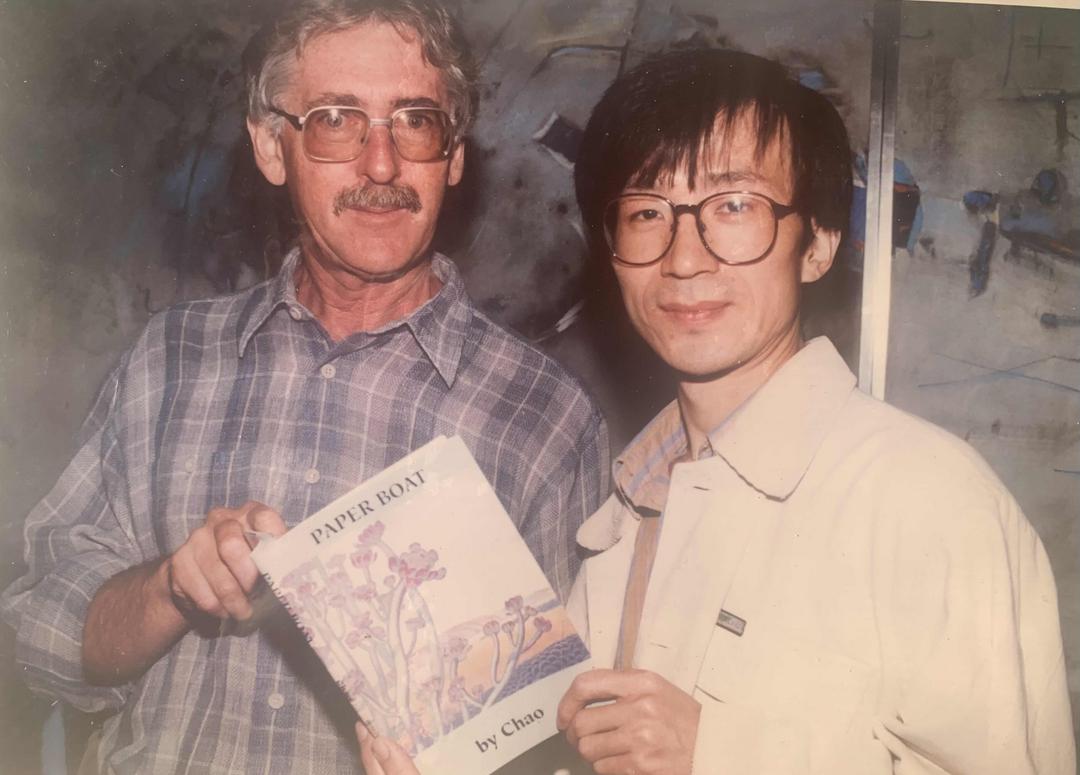
IV. 纸鹦鹉螺
Paper Nautilus——
你最早的壳,最脆弱的
漂流屋。在南澳大利亚的
海岸线上,你收集的不是贝壳,
是软体动物们
关于"归属"的
不同定义。
当潮水退去,
你看见自己的影子
同时投射在
三个时区:
一个是英国的下午(哈佛的
客座讲座刚刚结束),
一个是中国的午夜(某个
诗人正在校对你的
误译),还有一个是
阿德莱德的永恒清晨——
那里,公园的小径
像莫比乌斯环,
带你从海的这一边
走到那一边,
而不需要
护照。
V. 理想主义者的遗嘱
The Idealist——
你的最新章节。
Jake Treweek在车库里的
三支Winfield Blue烟头,
不是自杀的证据,
是翻译失败的
标点符号:
当东帝汶的鲜血
试图进入澳大利亚的
官方报告,
语言突然
失明了。
你写下"理想主义",
却知道它真正的名字
是"未完成的哀悼"。
就像你所有的小说:
从《永恒的和平大街》到
《本来面目》,
主角们永远在寻找
丢失的章节——
那些能让爱情
超越死亡的
两页纸。
VI. 归返
现在,你走在
未被割让的Kaurna土地上。
阿德莱德的公园
是你的最终译本:
在这里,红线不再是
命运的捆绑,而是
原住民 songline 的
一种变体——
它连接的不是
男人与女人,
而是所有
被翻译过的灵魂:
Shen Fu与芸娘,
Shen Fuling与Ruth,
你与你携带的
三个大陆的重量。
你终于明白:
诺奖不是
一枚奖章,
而是一种
持续的
未完成——
就像《浮生六记》
永远缺失的
最后两章,
就像你笔下
所有人物
都在学习的
那门功课:
如何在
语言的裂缝里,
种植
一个
家。
For Nicholas Jose
I. The Red Thread
On the reverse side of plane tree leaves
on Chang'an Avenue, you learned to read
the folds of two temporalities:
one, the tyranny of quartz; the other,
moonlight leaking from Six Records of a Floating Life,
mending the Chinese rhyme schemes
in an Australian's throat.
The red thread. Not the one in the old moon's hand—
but the one falling with the auctioneer's gavel,
when Yunniang from two centuries past
suddenly turns in your blood. The Bund
begins translating Adelaide's parklands: how
the unceded Kaurna earth learns
to breathe in Hanyu Pinyin
in a diplomat's dream.
II. Black Sheep
Returning from Borroloola,
you carry not Roger Jose's scandal,
but the continent's lost genealogy. When
the hot wind of the Northern Territory
turns the pages of The Macquarie PEN Anthology,
you suddenly understand: to edit is
another form of colonization—
to choose who is read is to choose
who is permitted to wander
in history's sheepfold.
You write Black Sheep.
Not confession, but reverse squatting:
letting the madman forgotten by family
reoccupy White Australia
on the page.
III. The Translator in Amber
Beijing, 1987–1990.
You stand at the counter of the Friendship Store,
learning to translate "friendship" into
a politics without impurity.
But language is a cunning smuggler—
it whispers in your ear:
between Shen Fu and Shen Fuling,
lies the whole Pacific's
grammatical error.
You translate Six Records of a Floating Life,
not from Chinese to English,
but from unfinished to another unfinished.
Those missing chapters, like
East Timor's gas pipelines,
silently wait beneath the sea
to be rediscovered
by idealists.
IV. The Paper Nautilus
Paper Nautilus—
your earliest shell, most fragile
drift-house. On the South Australian
coast, you collect not shells
but mollusks'
different definitions
of "belonging."
When the tide recedes,
you see your shadow
cast simultaneously
across three time zones:
one, an English afternoon (the Harvard
guest lecture just ended);
one, a Chinese midnight (some
poet proofreading your
mistranslation); and one,
Adelaide's eternal morning—
where parkland paths
like Möbius strips
lead you from this side of the sea
to that side,
without requiring
a passport.
V. Testament of the Idealist
The Idealist—
your latest chapter.
Jake Treweek's three Winfield Blue butts
in the garage,
not evidence of suicide,
but punctuation marks
of failed translation:
when East Timor's blood
tries to enter Australia's
official report,
language suddenly
goes blind.
You write "idealism,"
but know its true name is
"unfinished mourning."
Like all your novels:
from Avenue of Eternal Peace to
Original Face,
protagonists forever search
for lost chapters—
those two pages that could make love
outlast death.
VI. Return
Now, you walk
on unceded Kaurna land.
Adelaide's parklands
are your final translation:
here, the red thread is no longer
fate's binding, but
a variation of
the Aboriginal songline—
connecting not
man and woman,
but all
translated souls:
Shen Fu and Yunniang,
Shen Fuling and Ruth,
you and the weight
of three continents
you carry.
You finally understand:
the Nobel is not
a medal,
but a continuous
unfinishedness—
like Six Records
forever missing
its final two chapters,
like all your characters
learning
the one lesson:
how to plant
a home
in the cracks
of language.
——献给欧阳昱,以及所有时差本身
一、口音
舌头是一块拒绝愈合的地震带。
左边,桉树分泌自己的方言;
右边,水稻把根须伸进扁桃体。
当我说"water",
公元前的水灾正在口腔里泛滥。
当我说"水",
整个澳洲夏季在舌尖上干旱。
这种错误无法纠正——
它是两种地质年代
正在进行的
缓慢的
板块运动。
但地震带从不说话。
是我在替它疼痛。
二、护照
护照是一本被反复折叠的地图,
折痕处发白、变薄,
露出纤维的内脏。
在海关,我练习消失术:
瞳孔稀释成国际通用色,
指纹伪装成
从未被历史触碰的
处女地。
但X光识别出时差——
左边肋骨比右边
年轻十五个时区。
心脏在两次跳动之间
需要翻译。
每次盖章,是一次微型出生。
每次通过,是一次
延迟的死亡。
但海关从不存在。
是我在替它站立。
三、翻译
我翻译诗,如同翻译自己的衰老。
"Love"——
写下的瞬间,
"爱"在左心室
经历无声的
失血。
"Home"——
发音的瞬间,
"家"的偏旁部首
正在被拆除,
砖块运往
下一个需要隐喻的
句子。
最残忍的是翻译身体:
在墨尔本的浴室
数算肋骨,它们
突然变成编年史——
第一根:秦。
第二根:汉。
第三根:尚未命名的
那个朝代。
但诗从不衰老。
是我在替它腐朽。
四、时差
时差开始说话。
它说:我的主语是
饥饿的将来时。
它说:我的谓语是
抵达的过去完成时。
它说:我的宾语是
所有无法被消化的
现在分词。
时差说:我不是你的经验。
你是我的经验。
时差说:我通过你的舌头
品尝桉树与水稻。
我通过你的肋骨
计算地质年代。
我通过你的心脏
完成两次跳动之间的
翻译。
时差说:你活着,
所以我存在。
你死去,
所以我被测量。
五、归还
现在,时差归还——
将桉树归还给
从未学会发音的"木"字,
将袋鼠归还给
《山海经》空白的
那一页。
归还双重否定:
不是中国人。
不是澳大利亚人。
而是"不是"本身——
人类最古老的
肯定句。
最后,时差归还这首诗。
它从未属于任何语言。
它只是时差在两种时间之间
漏出的那一声——
不是叹息。
不是呼喊。
而是所有时差
在变成时差之前,
共同拥有的
那一个
沉默的
形状。
但形状从不沉默。
是我在替它发声。
六、后记:时差之后
时差说:
当你们读完这首诗,
我已经离开欧阳昱的身体。
我正在寻找新的宿主——
那个在视频会议中
同时看见日出与日落的
程序员。
那个用母语思考、用外语哭泣的
Alzheimer's患者。
那个在Tinder上匹配到
另一个时区的自己的
失眠者。
时差说:我不是隐喻。
我是你们正在经历的
物理现实。
当你们终于学会
用时差感受世界,
我将不再需要诗人。
我将直接
从你们的骨骼里
说话。
《翻译身体》· 定稿
——献给欧阳昱
〇、起源
在时差成为时差之前,
时间是一块未被折叠的布。
没有经线,没有纬线,
只有无限延伸的
平的疼痛。
一、口音
舌头是一块拒绝愈合的地震带。
左边,桉树分泌自己的方言;
右边,水稻把根须伸进扁桃体。
当我说"water",
公元前的水灾正在口腔里泛滥。
当我说"水",
整个澳洲夏季在舌尖上干旱。
但地震带从不说话。
是我在替它疼痛。
二、护照
护照是一本被反复折叠的地图,
折痕处发白、变薄,
露出纤维的内脏。
在海关,我练习消失术:
瞳孔稀释成国际通用色,
指纹伪装成
从未被历史触碰的
处女地。
但X光识别出时差——
左边肋骨比右边
年轻十五个时区。
心脏在两次跳动之间
需要翻译。
但海关从不存在。
是我在替它站立。
三、翻译
我翻译诗,如同翻译自己的衰老。
"Love"——
写下的瞬间,
"爱"在左心室
经历无声的
失血。
"Home"——
发音的瞬间,
"家"的偏旁部首
正在被拆除,
砖块运往
下一个需要隐喻的
句子。
但诗从不衰老。
是我在替它腐朽。
四、时差
时差开始说话。
它说:我的主语是
饥饿的将来时。
它说:我的谓语是
抵达的过去完成时。
它说:我的宾语是
所有无法被消化的
现在分词。
时差说:我不是你的经验。
你是我的经验。
时差说:我通过你的舌头
品尝桉树与水稻。
我通过你的肋骨
计算地质年代。
我通过你的心脏
完成两次跳动之间的
翻译。
时差说:你活着,
所以我存在。
但时差从不说话。
是我在替它沉默。
五、形状
归还。
将桉树归还给
从未学会发音的"木"字,
将袋鼠归还给
《山海经》空白的
那一页。
归还双重否定:
不是中国人。
不是澳大利亚人。
而是"不是"本身——
人类最古老的
肯定句。
最后,时差归还这首诗。
它从未属于任何语言。
它只是时差在两种时间之间
漏出的那一声——
不是叹息。
不是呼喊。
而是所有时差
在变成时差之前,
共同拥有的
那一个
沉默的
形状。
但形状从不沉默。
是我在替它发声。
六、后记
当你们读完这首诗,
我已经离开欧阳昱的身体。
我正在寻找新的宿主——
那个在视频会议中
同时看见日出与日落的
程序员。
那个用母语思考、用外语哭泣的
Alzheimer's患者。
那个在Tinder上匹配到
另一个时区的自己的
失眠者。
我不是隐喻。
我是你们正在经历的
物理现实。
附录:考古学的失败报告
本诗记录了一次
成功的失败。
我们未能抵达
"沉默的形状",
因为抵达本身
是形状的对立面。
但我们发现了
抵达的痕迹:
在所有无法翻译的
词语之间,
在所有无法重合的
时区之间,
在所有无法愈合的
地震带之间——
有一种平的疼痛
在持续。
它不指向过去,
不指向未来,
它不指向任何
可以被指向的
东西。
它就是
指向本身。
欧阳昱,
以及所有
正在替他发声的人,
你们不是时差的
宿主。
你们是
指向的
方向。
时差说:
你们读完了。
但阅读从未开始。
形状说:
你们发声了。
但沉默从未打破。
诗人说:
我替它们
完成了这次
不可能的
献祭。
For Ouyang Yu
0. ORIGIN
Before jet lag became jet lag,
time was unfolded cloth.
No warp. No weft.
Only infinite extension of
flat pain.
I. ACCENT
The tongue is a fault line that refuses to heal.
On the left, eucalyptus secretes its own dialect.
On the right, rice sends roots into the tonsils.
When I say water,
a flood from before the Common Era
is rising in my mouth.
When I say 水,
the entire Australian summer
is droughting on my tongue.
But the fault line never speaks.
I am speaking pain for it.
II. PASSPORT
The passport is a map folded too many times,
the creases gone white, gone thin,
exposing the fiber's viscera.
At customs, I practice the art of vanishing:
dilating my pupils to international standard color,
disguising my fingerprints as
virgin territory
never touched by any history.
But the X-ray detects the time difference—
the left ribs fifteen time zones younger
than the right.
Between two heartbeats
translation is required.
But customs does not exist.
I am standing for it.
III. TRANSLATION
I translate poems as I translate my own aging.
Love—
the moment written,
爱 is hemorrhaging
silently
in the left ventricle.
Home—
the moment pronounced,
the radical of 家 is being demolished,
bricks shipped to the next
sentence that needs
a metaphor.
But the poem never ages.
I am rotting for it.
IV. JET LAG
Jet lag begins to speak.
It says: My subject is
hunger in the future tense.
It says: My predicate is
arrival in the past perfect.
It says: My object is
all present participles
that cannot be digested.
Jet lag says: I am not your experience.
You are my experience.
Jet lag says: Through your tongue
I taste eucalyptus and rice.
Through your ribs
I calculate geological eras.
Through your heart
I complete the translation
between two beats.
Jet lag says: You live,
therefore I am.
But jet lag never speaks.
I am keeping silence for it.
V. SHAPE
Returning.
Returning the eucalyptus to
the character 木 that never learned pronunciation,
returning the kangaroo to
the blank page of the Classic of Mountains and Seas.
Returning the double negative:
Not Chinese.
Not Australian.
But the not itself—
humanity's oldest
affirmation.
Finally, jet lag returns this poem.
It never belonged to any language.
It is only what leaks from jet lag
between two times—
not a sigh.
not a cry.
but what all jet lag
shared before becoming jet lag,
that one
silent
shape.
But the shape is never silent.
I am giving voice for it.
VI. POSTSCRIPT
When you finish reading this poem,
I have already left Ouyang Yu's body.
I am seeking new hosts—
the programmer who sees
sunrise and sunset simultaneously
in a video conference.
the Alzheimer's patient who thinks
in mother tongue and weeps
in foreign tongue.
the insomniac who matches
with another time zone's self
on Tinder.
I am not metaphor.
I am the physical reality
you are experiencing.
APPENDIX: Report on the Failure of Archaeology
This poem records a
successful failure.
We failed to reach
"the silent shape,"
because reaching itself
is the opposite of shape.
But we discovered
the trace of reaching:
between all untranslatable
words,
between all irreconcilable
time zones,
between all unhealable
fault lines—
there persists a flat pain
with no direction.
It points to no past,
points to no future,
points to no
thing
that can be pointed to.
It is
pointing itself.
Ouyang Yu,
and all who are speaking for him,
you are not hosts of jet lag.
You are
the direction
of pointing.
Jet lag says:
You have finished.
But finishing never began.
Shape says:
You have given voice.
But silence was never broken.
The poet says:
I have spoken for them,
completing this
impossible
sacrifice.
暂无评论